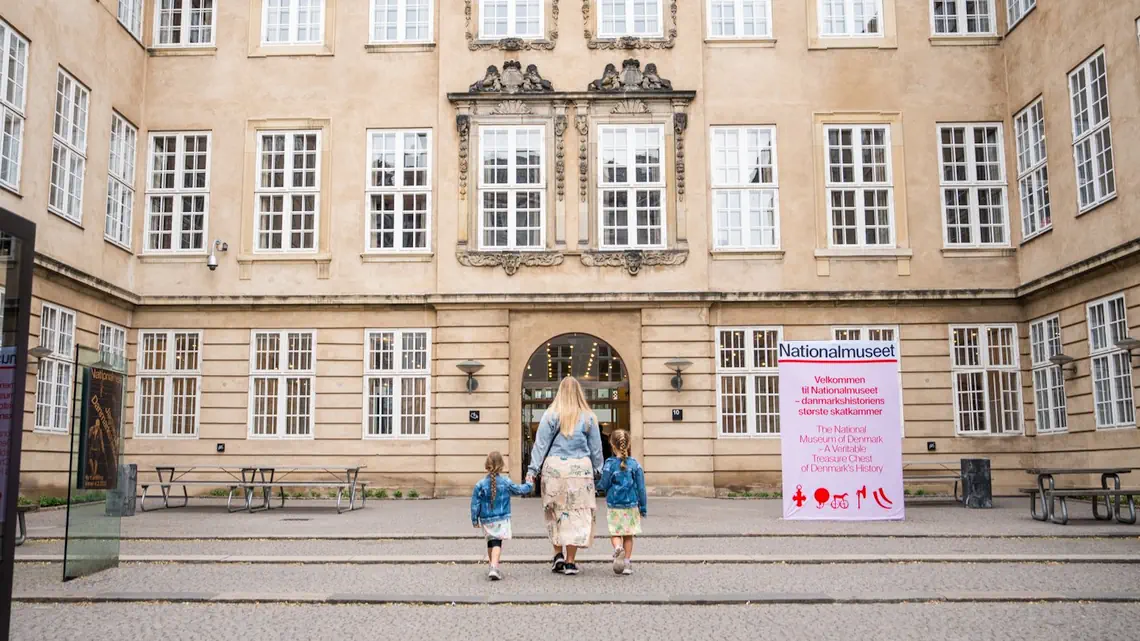
Located in the heart of Copenhagen, close to Christiansborg Palace, Tivoli Gardens, Strøget and the old city centre, the museum is an essential stop for visitors who want more than a quick photo tour of the capital.
Visit the National Museum of Denmark in Copenhagen
If you want to explore Denmark’s story from the first humans and the Viking Age to royal history, everyday life, global collections and modern culture, the National Museum of Denmark is a must-visit attraction. The museum is large, central and suitable for adults, families, history lovers and first-time visitors to Copenhagen.
Booking car rental through Terminal3.dk is useful if you are arriving at Copenhagen Airport, staying outside the city centre or planning day trips around Denmark. For the National Museum itself, the best approach is usually to park nearby and explore the central city on foot.
What is the National Museum of Denmark?
The National Museum of Denmark, known in Danish as Nationalmuseet, is the country’s main museum of cultural history. Its exhibitions cover thousands of years of Danish and international history, with objects, stories and displays that show how people lived, worked, travelled, traded, worshipped and built communities over time.
The museum is located in central Copenhagen, making it easy to combine with other major attractions. It is a strong choice for a rainy day, a family day out or the first full day of a Copenhagen trip, because it gives useful context for the castles, churches, streets and landscapes you may visit later.
Explore Denmark’s history from prehistory to today
The museum’s Danish history exhibitions take visitors through major periods in the country’s past. You can explore prehistoric Denmark, Viking society, the Middle Ages, the Renaissance, royal history, everyday objects, folk traditions and more recent social history.
Highlights may include:
- Prehistoric Denmark with ancient tools, burials and archaeological finds
- The Viking Age with weapons, jewellery, everyday objects and stories of trade and travel
- Medieval Denmark with church art, religious objects and historical displays
- Royal and cultural history connected with Denmark’s changing society
- Ethnographic and global collections showing connections beyond Denmark
- Temporary exhibitions that change during the year
The Viking Age at the National Museum
For many visitors, the Viking collections are a highlight. Denmark has a rich Viking history, and the museum offers a detailed introduction to Viking life, belief, trade, travel and power.
You can learn how Viking ships connected Scandinavia with the wider world, how people lived in towns and farms, and how objects such as weapons, jewellery, coins and tools reveal everyday life as well as warfare and exploration.
Danish design, everyday life and cultural heritage
The National Museum is not only about kings, warriors and ancient artefacts. It also tells the story of ordinary people and Danish society through objects from homes, workplaces, villages and towns.
Visitors can see how Danish life changed over time through clothing, furniture, household goods, craft traditions, religious objects and social history. This makes the museum a useful stop before exploring Copenhagen neighbourhoods, castles and historic towns around Zealand.
A good museum for families
The National Museum of Denmark is a strong choice for families visiting Copenhagen. The Children’s Museum is especially popular because children can touch, play and interact with history rather than only looking at objects behind glass.
Family activities may include hands-on historical settings, Viking-inspired play, medieval scenes and other interactive experiences. Availability can vary, so check current visitor information before planning your day around a specific activity.
Guided tours and temporary exhibitions
The museum offers changing exhibitions, events and guided tours throughout the year. A guided tour can be a good option if you want a clear overview of Danish history or a deeper introduction to the Viking Age.
Before visiting, check the museum’s official website for current exhibitions, opening hours, ticket prices and tour availability. This is especially important during holidays, school breaks and busy travel periods.
How long should you spend at the National Museum?
Most visitors should allow at least two to three hours for the National Museum of Denmark. If you are very interested in history, travelling with children or planning to visit several exhibitions, you could easily spend half a day or more.
Because the museum is large, it is a good idea to choose your priorities before you arrive. First-time visitors often focus on Danish prehistory, the Viking Age, medieval Denmark and the Children’s Museum if travelling with family.
Attractions near the National Museum of Denmark
The National Museum is centrally located, so it is easy to combine with other Copenhagen attractions once you have parked or arrived nearby.
Christiansborg Palace
Christiansborg Palace is close to the museum and is home to the Danish Parliament, royal reception rooms and historic palace spaces. It is a natural addition to a history-focused day.
Tivoli Gardens
Tivoli Gardens is within walking distance and is one of Copenhagen’s most famous attractions, with rides, gardens, restaurants, lights and seasonal events.
Strøget
Strøget, Copenhagen’s famous pedestrian shopping street, is nearby and works well for shopping, cafés and city-centre atmosphere before or after the museum.
Ny Carlsberg Glyptotek
The Glyptotek is another excellent museum nearby, known for sculpture, art, ancient collections and a beautiful winter garden.
The Danish War Museum
The Danish War Museum is also close by and can be combined with the National Museum if you want a deeper look at military history and Denmark’s role in conflict over time.
Should you drive to the National Museum?
The National Museum is in central Copenhagen, where traffic can be busy and parking may be paid, limited or restricted. The museum does not work best as a door-to-door driving stop. Instead, use an official parking area nearby, check local parking signs carefully and continue on foot.
If you have a rental car, use it for airport transfers, hotel access, luggage and day trips. For central Copenhagen attractions such as the National Museum, Christiansborg, Tivoli Gardens and Strøget, it is usually more practical to park once and explore the area on foot.
Why rent a car at Copenhagen Airport?
Renting a car at Copenhagen Airport is useful if your trip includes more than central Copenhagen. It is especially practical if you are travelling with luggage, children or a group, staying outside the city centre, attending meetings, visiting family or planning day trips around Zealand.
With car rental from CPH Airport, you can combine the National Museum with wider Danish history routes, including Roskilde, Kronborg Castle, Frederiksborg Castle, Dragør, Helsingør and Louisiana Museum of Modern Art.
Easy history day trips after visiting the museum
After learning about Danish history at the National Museum, a rental car gives you the freedom to visit historic places outside Copenhagen.
- Roskilde for the cathedral, Viking Ship Museum and historic town centre
- Kronborg Castle in Helsingør for royal history, Shakespeare and Øresund views
- Frederiksborg Castle in Hillerød for royal collections, gardens and impressive architecture
- Dragør for a historic harbour town close to Copenhagen Airport
- Louisiana Museum of Modern Art for art, architecture and sea views
- Malmö in Sweden via the Øresund Bridge, if your rental agreement allows cross-border travel
Suggested National Museum itinerary from Copenhagen Airport
Morning: Arrive at Copenhagen Airport, collect your rental car and drive to your hotel or a convenient parking area near central Copenhagen.
Late morning: Visit the National Museum of Denmark and focus on Danish history, the Viking Age and the exhibitions that interest you most.
Lunch: Eat at the museum café, near Strøget, around City Hall Square or close to Christiansborg Palace.
Afternoon: Continue to Christiansborg Palace, Tivoli Gardens, the Glyptotek or the Danish War Museum.
Evening: Return to your rental car and drive to your hotel, a restaurant outside the centre or your next Copenhagen stop.
Practical tips for visiting the National Museum of Denmark
- Check current opening hours and ticket prices before visiting.
- Allow at least two to three hours for the museum.
- Choose your priority exhibitions before you arrive if you have limited time.
- Visit the Children’s Museum if travelling with younger children.
- Use official parking areas if arriving by rental car.
- Check Copenhagen parking signs carefully before leaving your vehicle.
- Combine the museum with Christiansborg Palace, Tivoli Gardens, Strøget or the Glyptotek.
Book car rental at Copenhagen Airport and explore Danish history
The National Museum of Denmark is one of Copenhagen’s most important cultural attractions, offering a deep introduction to Danish history, the Viking Age, everyday life, global collections and family-friendly exhibitions.
Book your Copenhagen Airport car rental with Terminal3.dk and enjoy the freedom to combine the National Museum with Copenhagen sightseeing, airport transfers and historic day trips around Denmark at your own pace.